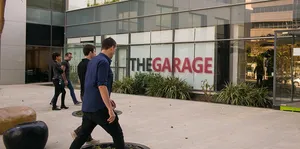
Image showing Microsoft Garage office. Source: Microsoft
Launched in 2009 within Microsoft's Office Labs group in Redmond, Washington, The Garage was designed to give employees the freedom to experiment with ideas, develop prototypes and collaborate across teams.
Unlike traditional corporate innovation programs that prioritize proposals and funding competitions, The Garage encouraged employees to build working projects. Its philosophy was summed up in the slogan “Doers. Not Talkers.”
Over the years, the program expanded beyond its original location, with Microsoft listing Garage spaces across 15 regions, including Vancouver, the San Francisco Bay Area, New York, Ireland, India, Israel and Beijing.
These facilities provided access to tools, workshops and collaborative environments where employees could develop ideas that might not fit within their regular job responsibilities.
Microsoft's Global Hackathon Faces an Uncertain Future
One of The Garage's most important responsibilities was organizing Microsoft's annual Global Hackathon.
The first companywide event took place in July 2014, attracting more than 11,000 registered participants from 80 countries. It subsequently became an established part of Microsoft's internal culture, allowing employees to form teams and develop experimental projects.
The future of the event is now uncertain. Microsoft says the hackathon team is reimagining the program and plans to share further details later.
The change raises questions about how the company will encourage employees to collaborate across departments and develop ideas outside their regular work.
Although Microsoft has not announced that all hackathon activities will end permanently, the loss of a central organizing team could change how future events operate.
Microsoft Garage Helped Create Products Used Beyond the Company
The Garage was not just an employee workspace. It also helped develop experimental tools that eventually reached users outside Microsoft.
One notable example is Mouse Without Borders, a utility that allows people to control multiple computers using a single keyboard and mouse. Another is Arrow Launcher, an experimental Android launcher that evolved into Microsoft Launcher.
Garage projects also contributed to Microsoft's broader accessibility and learning efforts. Employee hackathons helped generate ideas that influenced products and tools designed to address practical problems.
The program's value was not always measured through immediate revenue. It also helped employees acquire new skills, connect with colleagues and explore ideas that could improve existing products.
That grassroots approach became a defining feature of The Garage's identity.
Why Is Microsoft Closing The Garage?
Microsoft has framed the decision as a change in how it supports innovation rather than an abandonment of experimentation.
In its internal communication, the company said that activities once supported by dedicated programs and spaces now take place every day within individual teams. Microsoft also emphasized that a builder mindset remains central to its culture.
The move comes as the company makes substantial investments in AI infrastructure and products while also looking for ways to manage costs.
Microsoft has made other changes to its workplace learning and campus facilities in 2026, including closing employee libraries at several locations and shutting its Redmond Visitor Center.
However, Microsoft has not publicly attributed The Garage's closure to a specific cost-saving target or disclosed the full employment impact of the decision.
What Happens to Microsoft's Garage Maker Spaces?
The future of the physical Garage locations will vary by site. According to the internal FAQ reported by GeekWire, some spaces could be restricted as early as October 23, 2026.
Microsoft has not provided a complete public breakdown of which facilities will close, change access rules or continue operating in another form.
Employees have also been told they cannot take equipment, tools or materials from the spaces with them.
The uncertainty extends to the support structure that made these locations useful. The Garage brought together dedicated spaces, technical resources, workshops and opportunities for collaboration, making it different from ordinary office areas.
Even if individual teams continue experimenting, reproducing that combination across a large organization may prove challenging.
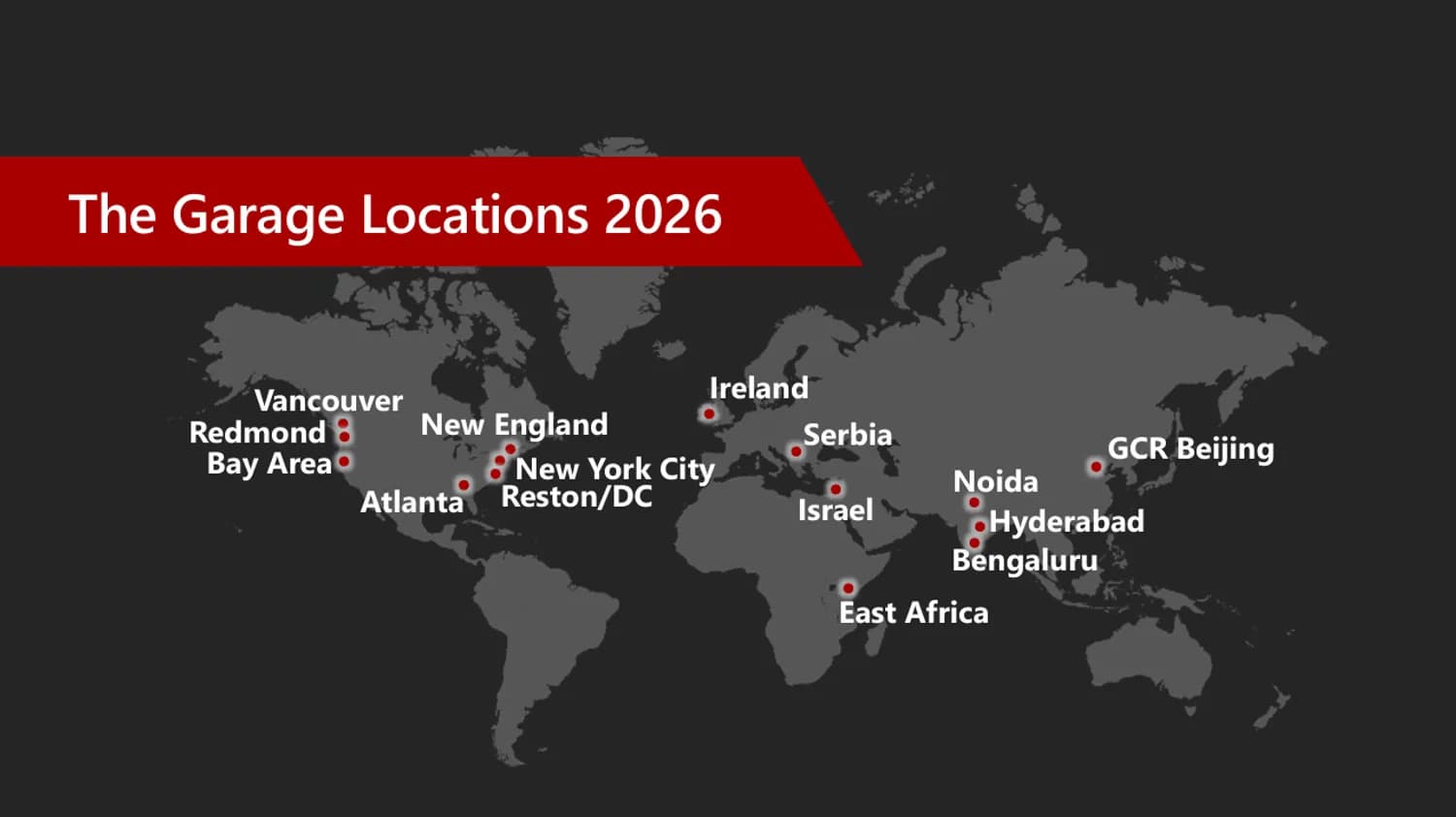
Image showing Microsoft Garage Locations. Source: Microsoft
Could Microsoft's Decision Affect Employee Innovation?
The closure raises an important question for large technology companies: can innovation flourish without a dedicated program to support it?
Microsoft argues that experimentation is already becoming part of everyday work. Integrating innovation into regular teams could help projects connect more directly with product development and business priorities.
However, dedicated programs can offer something that ordinary work environments may struggle to provide: time to explore unconventional ideas without immediate pressure to deliver commercial results.
The Garage's former co-founder Quinn Hawkins highlighted the importance of supporting people who actually build projects, rather than focusing exclusively on ideas and proposals. His reflections underline why grassroots innovation can be valuable even when it does not immediately generate billions of dollars in revenue.
The long-term impact will depend on whether Microsoft creates alternative opportunities for employees to experiment, collaborate and develop projects beyond their assigned responsibilities.
Final Thoughts
Microsoft's decision to wind down The Garage closes an important chapter in the company's innovation history. For 17 years, the program helped employees develop experimental products, learn new skills and collaborate through maker spaces and hackathons.
Microsoft maintains that innovation will continue within its teams, but the future of the Global Hackathon and several physical locations remains uncertain.
The real test will be whether the company can preserve The Garage's culture of hands-on experimentation without its centralized infrastructure. As Microsoft prioritizes AI and other strategic investments, its approach to employee-led innovation will be worth watching.