Samsung LPDDR45X Introduction Image (Source: Samsung)
Samsung is making a major transition in the semiconductor industry by phasing out its older LPDDR4 RAM technology and shifting focus entirely to LPDDR5. This move reflects the growing demand for faster, more efficient memory in modern devices such as smartphones, tablets, and AI-powered systems.
Samsung Phasing Out LPDDR4
Samsung has already begun winding down LPDDR4 and LPDDR4X production, and reports indicate that the company has stopped accepting new orders for these memory chips. Existing orders will still be fulfilled, but no new long-term production is planned.
The company is expected to completely discontinue LPDDR4 manufacturing by the end of 2026, marking the end of a technology that has been widely used for nearly a decade.
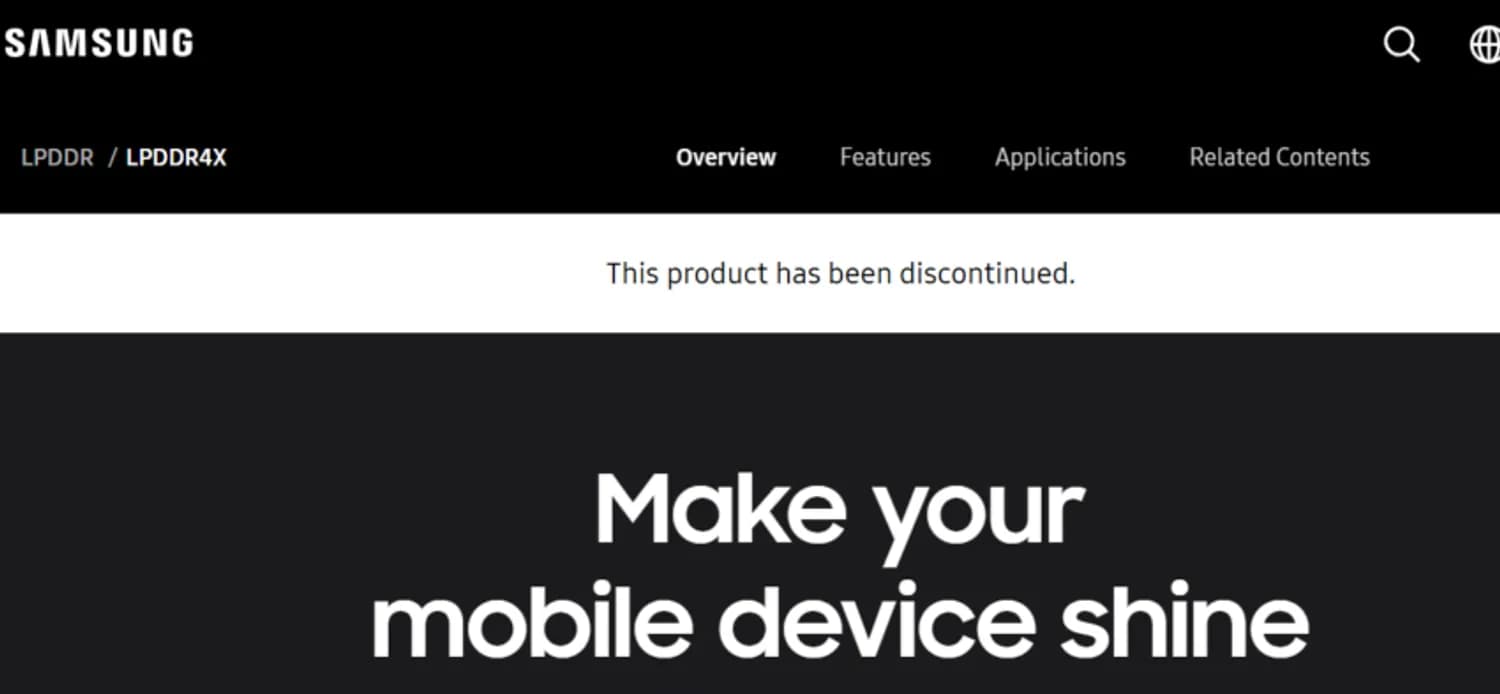
LPDDR4 page discontinued on Samsung's official website
Shift Toward LPDDR5 Technology
Samsung’s strategy is centered around transitioning its production lines to LPDDR5, a newer and more advanced memory standard. Once LPDDR4 production ends, these manufacturing lines will be converted to produce LPDDR5 chips, with the transition expected to ramp up into 2027.
This shift allows Samsung to better utilize its resources and align with current market demand, where newer memory technologies are more profitable and widely needed.
Why LPDDR5 Is the Future
LPDDR5 offers significant improvements over LPDDR4 in terms of speed, efficiency, and overall performance. It can deliver up to around 50% higher bandwidth, making it better suited for modern applications like gaming, AI processing, and multitasking.
In addition to performance gains, LPDDR5 is more power-efficient, which is crucial for improving battery life in smartphones and other portable devices. These advantages make it the preferred choice for future devices.
LPDDR4 VS LPDDR5
Table showing LPDDR4 VS LPDDR5 comparision
| Feature | LPDDR4 | LPDDR5 |
|---|---|---|
| Speed | Lower | Up to ~50% faster |
| Power Efficiency | Moderate | High |
| Use Case | Older & budget devices | Modern smartphones & AI workloads |
| Future Support | Declining | Expanding |
Impact on Devices and Industry
As Samsung transitions to LPDDR5, the effects will be felt across the entire tech industry. Smartphone manufacturers that relied on LPDDR4 will need to upgrade their designs, and chipmakers like Qualcomm and MediaTek will also shift toward supporting newer memory standards.
For consumers, this change means better performance and efficiency even in mid-range and budget devices, as LPDDR5 becomes more widely available. However, there may be short-term challenges such as increased costs and supply adjustments during the transition.
Conclusion
Samsung’s decision to retire LPDDR4 and focus on LPDDR5 represents a natural evolution in memory technology. As devices become more demanding and performance expectations continue to rise, LPDDR5 is set to become the new standard. This shift not only strengthens Samsung’s position in the DRAM market but also ensures that future devices deliver faster speeds, better efficiency, and improved user experiences.