
Samsung Exynos 2700 Conceptual Image
Samsung’s upcoming flagship chipset, the Exynos 2700, has made an early appearance in Geekbench listings, giving tech enthusiasts a first look at its performance and architecture. Although still in the engineering phase, the leaked benchmark results provide insight into Samsung’s next-generation mobile processor, expected to power future Galaxy devices.
This early leak highlights Samsung’s continued push to improve its in-house Exynos lineup with better efficiency, stronger performance, and advanced GPU capabilities.
Exynos 2700 Appears in Geekbench Database
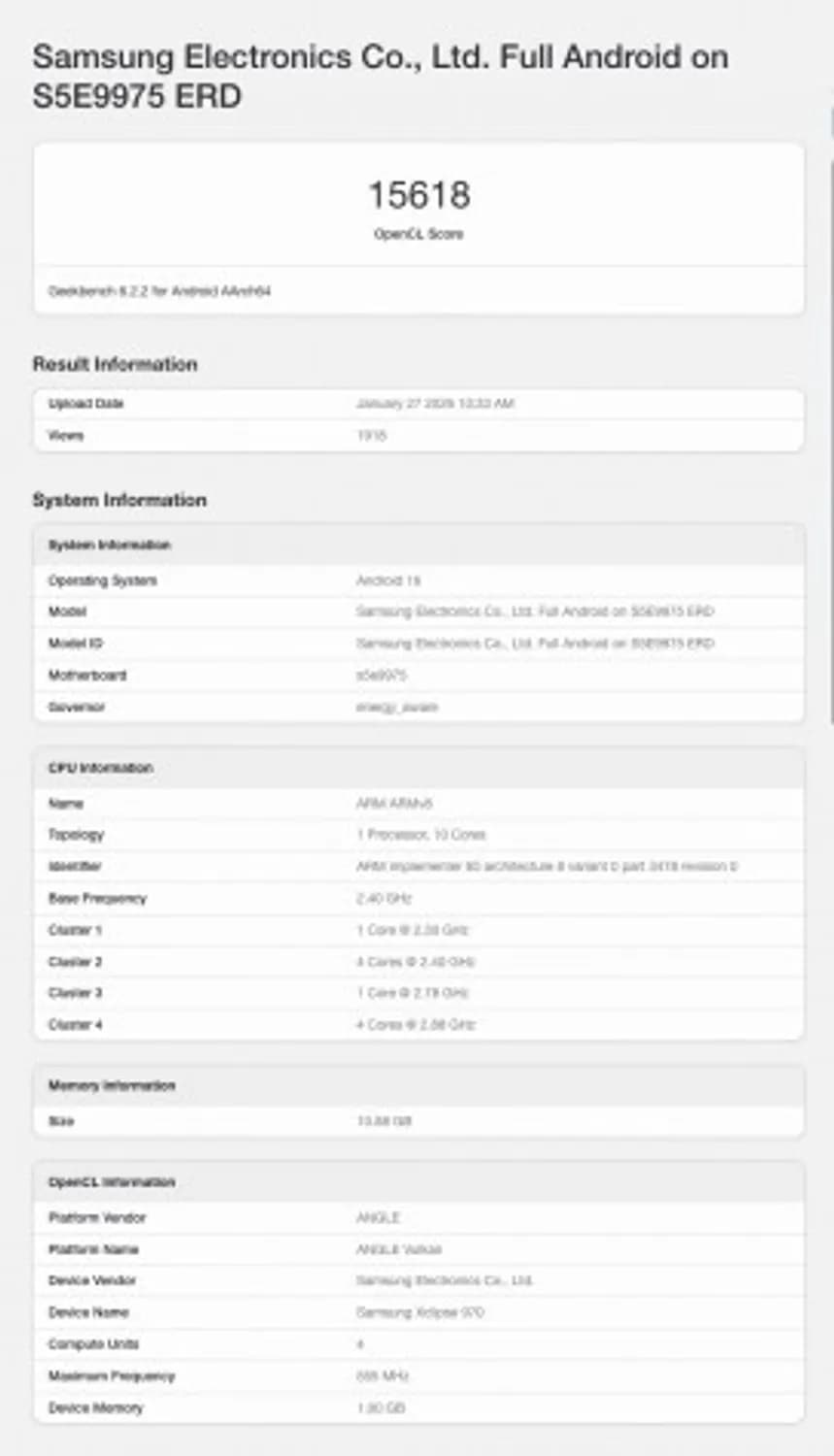
The Exynos 2700 has surfaced on Geekbench under the model number S5E9975, reportedly running on a pre-production engineering device. Early listings suggest that Samsung is actively testing the chipset ahead of its official launch, likely targeting future flagship smartphones such as the Galaxy S27 series.
The chip is still under development, meaning the final retail version could deliver significantly improved performance compared to these early results.
Early Performance Scores Revealed
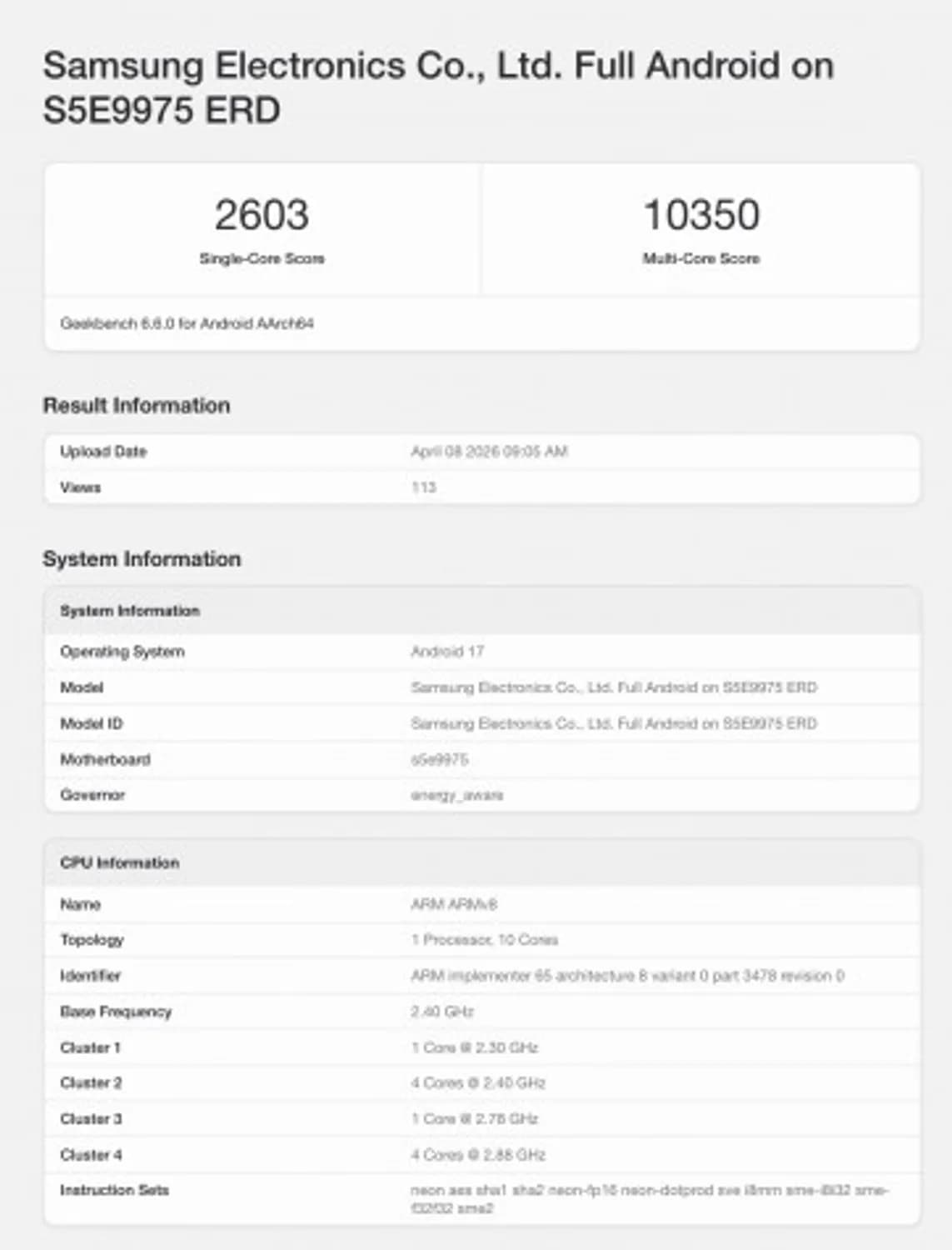
According to the Geekbench listing, the Exynos 2700 delivers a single-core score of around 2,603 and a multi-core score of approximately 10,350. These results place it in a competitive range, although not yet at the top of current flagship performance charts.
It is important to note that these benchmarks come from an engineering sample, which typically runs at lower optimization levels and may not reflect final performance after software tuning and hardware refinements.
CPU Architecture and Core Design
The Exynos 2700 is expected to feature a 10-core CPU configuration, continuing Samsung’s hybrid architecture approach. The setup reportedly includes a mix of high-performance and efficiency cores designed to balance power consumption with speed.
The fastest cores are clocked around 2.88GHz, while efficiency cores operate between 2.3GHz and 2.4GHz, allowing the chip to handle both heavy workloads and background tasks efficiently.
This design suggests Samsung is focusing on improved multitasking, gaming performance, and better thermal management compared to previous generations.
Xclipse 970 GPU and Graphics Improvements
One of the most notable upgrades in the Exynos 2700 is the inclusion of the Xclipse 970 GPU, which continues Samsung’s collaboration-based graphics development strategy.
Early reports suggest improved OpenCL performance, indicating better gaming capabilities and enhanced support for graphics-intensive applications. This could make the chipset more competitive against rival Snapdragon and Apple silicon chips in future flagship devices.
Built on Advanced 2nm Process Technology
The Exynos 2700 is expected to be manufactured using Samsung’s advanced 2nm process node, which aims to deliver improved power efficiency and higher performance density.
This smaller fabrication process could result in better battery life, reduced heat generation, and improved sustained performance—key areas where previous Exynos chips have faced criticism.
What This Means for Galaxy S27 Series
The Exynos 2700 is widely expected to power select variants of the upcoming Samsung Galaxy S27 series, depending on regional availability.
If optimized successfully, users could see noticeable improvements in:
- Gaming performance
- AI processing tasks
- Battery efficiency
- Multitasking speed
However, as with all early leaks, real-world performance will only be confirmed once retail devices are released.
Conclusion
The early Geekbench appearance of the Samsung Exynos 2700 offers a promising glimpse into the company’s next-generation mobile chipset. While current scores reflect an unfinished engineering sample, the combination of a 10-core CPU, Xclipse 970 GPU, and 2nm architecture signals a significant step forward for Samsung’s silicon strategy.
As development continues, the final version of the Exynos 2700 could bring stronger competition to the flagship mobile processor market and play a key role in future Galaxy devices.