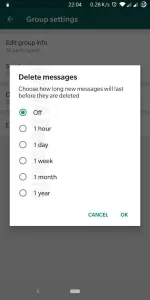
Whatsapp Upcoming Delete After Seen Messages
WhatsApp is working on a new privacy-focused feature that will allow users to send messages that automatically disappear once they are viewed. This upcoming update is part of Meta’s broader push to make conversations more secure, private, and temporary. Instead of relying only on time-based deletion, WhatsApp is now moving toward view-based message expiry, where content disappears immediately after being opened.
What Is the New Auto-Delete After Seen Feature?
The new feature will allow users to send messages that vanish right after the recipient reads them. Unlike traditional disappearing messages that delete after a fixed time period, this system is triggered by user activity, meaning the message is removed as soon as it is seen.
This builds on WhatsApp’s existing “View Once” system, which already allows photos, videos, and voice notes to disappear after a single view. The new update is expected to extend this idea further, potentially covering normal text messages as well, making everyday chats more private and temporary.
How the Feature Works
When this feature is enabled, the sender will likely be able to activate a special mode before sending a message. Once sent, the message will appear normally in the chat, but as soon as the recipient opens it, it will automatically disappear from the conversation.
This removes the need to set timers like 24 hours or 7 days and instead focuses on real-time viewing. It is designed for situations where users want to share sensitive or temporary information without leaving a digital trace in the chat history.
Auto-Delete VS Disappearing Messages
Table showing Auto-Delete VS Disappearing Messages, Existing Vs New Features
| Attribute | Disappearing Messages | Auto-Delete After Being Seen |
|---|---|---|
| Trigger Type | Time-based deletion (24h, 7 days, 90 days) | View-based deletion (message disappears after opening) |
| When Message Deletes | After a set duration even if unread | Immediately after recipient opens the message |
| Message Control | Sender sets timer duration | No timer; deletion depends on viewing |
| Message Type Support | Text, images, videos, and chats | Expected to support text + chats (future expansion) |
| User Interaction Required | No action needed after sending | Must be opened by recipient to trigger deletion |
| Use Case | Clean chat history over time | Highly sensitive or one-time information |
| Similar Feature Reference | WhatsApp disappearing chat mode | View Once system behavior extended to text/media |
Why WhatsApp Is Introducing This Feature
The main reason behind this update is privacy. WhatsApp has been gradually improving its privacy tools over the years, and this feature continues that direction. It helps users share information that does not need to remain stored permanently, such as one-time codes, personal details, or short-term instructions.
It also reduces chat clutter and gives users more control over what stays in their conversations. This aligns with the growing trend of ephemeral messaging, which is already popular in apps like Snapchat and Telegram.
Difference Between View Once and Auto-Delete Messages
Although the two features are similar, there is a key difference in how they work. The current “View Once” feature is mostly limited to media like images, videos, and voice notes. In contrast, the upcoming auto-delete-after-seen feature is expected to apply to text messages as well, making it more powerful and flexible.
This means users will no longer be limited to disappearing media, they may eventually be able to send fully disappearing conversations.
Privacy Considerations and Limitations
While this feature improves privacy, it is not completely foolproof. Even if a message disappears after being viewed, users may still find ways to capture it, such as taking screenshots or using another device to record the screen.
WhatsApp is expected to continue adding safeguards, but like all digital messaging systems, complete prevention of copying content is not possible. This is why users are usually advised to only send such messages to trusted contacts.
Conclusion
WhatsApp’s upcoming auto-delete-after-seen feature represents another step toward more private and controlled communication. By expanding beyond timed deletion and introducing view-based disappearance, the platform is moving closer to fully ephemeral messaging.
Once rolled out, this feature could significantly change how users share sensitive information and manage conversations, making WhatsApp even more privacy-focused in the future.