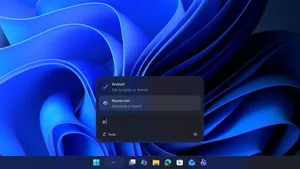
Image showing new Copilot AI agent on Windows 11 Tasksbar
Microsoft has officially confirmed that AI agents are still on track for Windows 11, and they will soon be integrated directly into the taskbar. This upcoming feature signals a major step toward making Windows an “AI-powered operating system,” where users can interact with intelligent assistants directly from their desktop.
AI Agents Are Still Coming to Windows 11
Despite earlier reports suggesting Microsoft might scale back AI features, the company has clarified that it is continuing its plan to introduce AI agents into Windows 11. These agents will be accessible directly from the taskbar and will be part of an upcoming public rollout. The feature has already appeared in preview builds, confirming that development is progressing and not canceled.
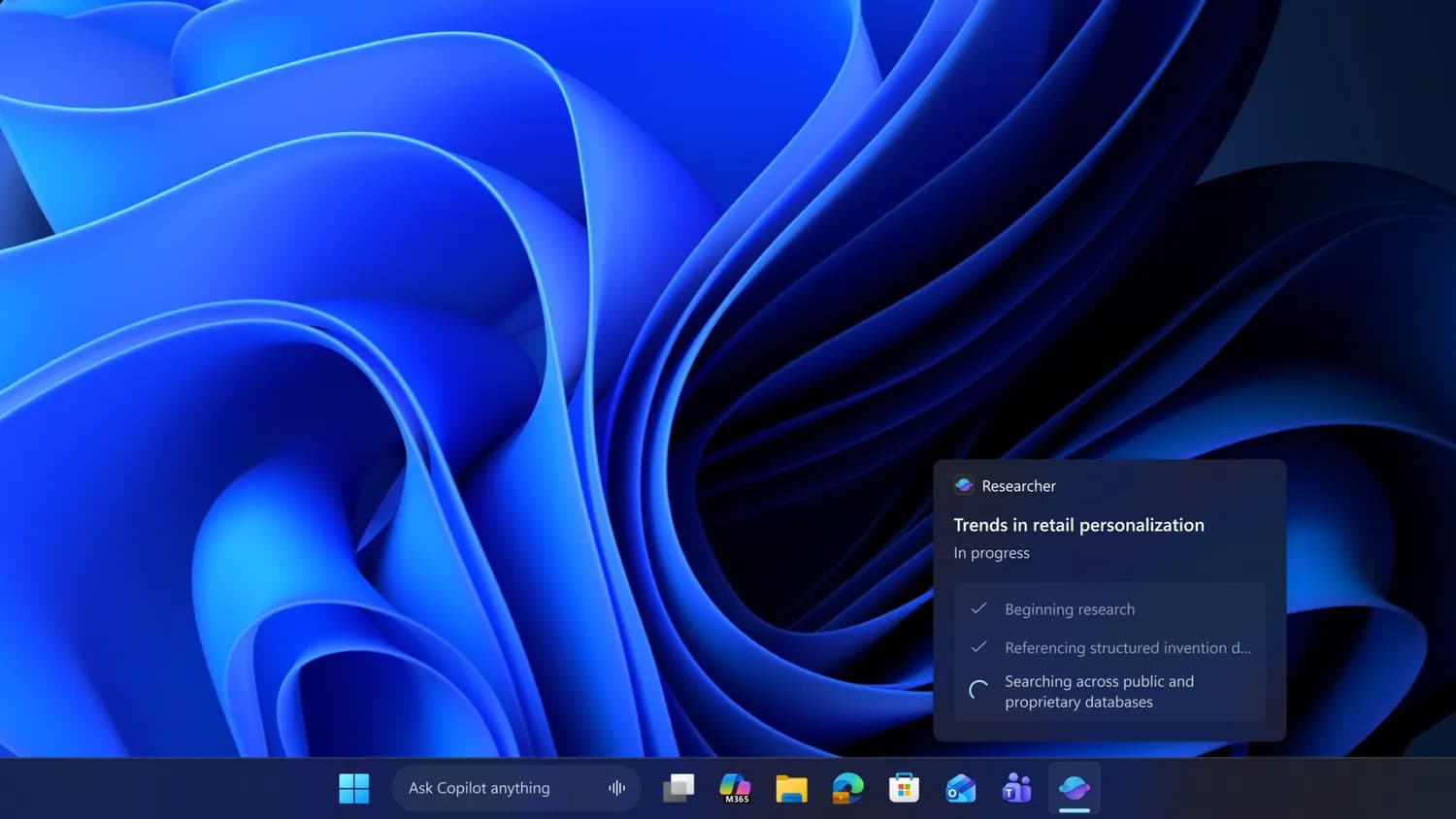
Image showing Copilot Researcher mode
What Are AI Agents in Windows 11?
AI agents are designed to act as intelligent assistants that can perform tasks on behalf of users. Unlike traditional assistants, these agents are more autonomous—they can plan, research, and execute actions with minimal input. For example, users may be able to:
- Automate repetitive tasks
- Search and organize files
- Get contextual help across apps
- Perform research in the background
This aligns with Microsoft’s broader vision of turning Windows into an “agentic OS” powered by AI.
How AI Agents Will Work on the Taskbar
The integration will allow users to access AI agents directly from the Windows 11 taskbar, likely through the Copilot interface. Users can hover over or click the Copilot icon to monitor or control these agents. Importantly, Microsoft has emphasized that:
- The feature will be optional (opt-in)
- It won’t be enabled automatically
- Users will have control over how agents interact with their system
This approach aims to balance innovation with privacy and user control.
Integration With Copilot and Third-Party Tools
Microsoft is not limiting this feature to its own ecosystem. The company plans to support third-party AI agents, allowing developers to integrate their tools directly into Windows. These agents could work alongside Microsoft Copilot and other AI services, creating a more flexible and powerful environment for productivity and automation.
Public Rollout Timeline
Microsoft has already introduced early versions of this feature in Windows 11 preview builds, including Release Preview Channel updates. While an exact date hasn’t been finalized, the company is actively preparing for a broader public rollout, likely as part of upcoming Windows 11 updates in 2026.
Why This Update Matters
This update represents a significant shift in how users interact with their PCs. Instead of manually performing tasks, users can rely on AI agents to handle workflows, saving time and improving efficiency. It also reflects a broader trend in the tech industry, where operating systems are evolving to include built-in AI capabilities rather than relying solely on standalone apps.
Challenges and Concerns
While the feature is promising, it raises important concerns around privacy and control. Since AI agents may access files or system data, Microsoft is expected to implement strict permission systems and safeguards. Additionally, some users may prefer a more traditional Windows experience, which is why keeping the feature optional is a key part of the rollout strategy.
Conclusion
Microsoft’s confirmation of AI agents coming to the Windows 11 taskbar highlights its long-term vision of an AI-first operating system. With a public rollout on the horizon, users can expect a more intelligent, automated, and responsive computing experience. As Windows continues to evolve, AI agents could become a core part of how people interact with their devices—bringing powerful automation directly to the desktop.