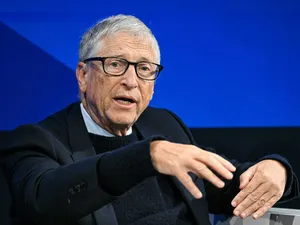
Image showing Bill Gates. Source: Business Insider
Microsoft co-founder Bill Gates has warned that artificial intelligence could trigger two decades of economic and social disruption before delivering an era of widespread abundance. While AI and robotics could eventually make essential goods and services cheaper and more accessible, Gates believes the transition could reshape employment, the global economy and humanity's sense of purpose.
Speaking on The Verge's Decoder podcast, Gates described the next 20 years as a period likely to produce winners and losers as AI capabilities expand. He argued that society must prepare for the consequences rather than focus exclusively on the technology's potential benefits.
AI Could Replace Millions of Jobs
Gates believes AI could significantly transform both office-based and manual work. Jobs involving telesales, customer support and accounting are particularly exposed because AI systems can increasingly perform routine tasks faster and at lower cost.
Physical work could also face major changes as robotics advances. Gates suggested that humanoid robots may eventually build houses, grow food and perform surgery, reducing the need for human labor across industries.
These developments could improve productivity and lower costs, but they also raise questions about how workers will earn a living if machines perform a growing share of economically valuable tasks.
The timing remains uncertain. Gates acknowledged that technological progress and decisions about how quickly AI is deployed could make the transition shorter or longer than his 20-year estimate.
How AI Could Create an Era of Abundance
Despite his concerns, Gates sees enormous potential in AI. Advanced systems and robots could help produce food, construct housing and deliver healthcare more efficiently.
Lower production costs could make essential goods and services accessible to more people. AI could also accelerate scientific research, improve medical treatments and help address challenges such as disease and food shortages.
However, technological abundance does not automatically guarantee that everyone will benefit. Governments, businesses and communities will need to determine how the economic gains are distributed and how people can access the products and services that AI helps create.
Without effective policies, Gates warns, the technology could widen the gap between wealthy individuals and those whose livelihoods are disrupted.
Why Work and Human Purpose Still Matter
One of Gates's biggest concerns is that work provides more than a paycheck. Employment can give people a sense of purpose, social connections, daily structure and opportunities to solve meaningful problems.
If AI eventually performs most economically necessary tasks, societies will face difficult questions about how people spend their time and find meaning.
Gates suggested that certain activities, including art, sports, cooking and childcare, could remain human-centered choices even when AI can perform them more efficiently.
He also raised the possibility of shorter working hours, earlier retirement and other measures that could help societies adapt to reduced demand for human labor.
Governments Must Prepare for AI Disruption
Gates believes managing the transition will require decisions beyond the technology industry. Policymakers may need to reconsider education, worker protections, taxation and how the benefits of increased productivity are shared.
AI also introduces security risks, including more sophisticated cyberattacks and potential misuse in biological research. Gates has argued that safeguards and government oversight will be necessary to ensure the technology's benefits outweigh its dangers.
Other technology leaders have raised similar concerns, although their predictions differ. Some expect widespread job displacement, while others argue that AI will create new occupations and that fears of mass unemployment may be premature.
The ultimate impact will depend on how quickly capabilities improve, how businesses deploy them and how effectively institutions respond.
Final Thoughts
Bill Gates's warning is not that AI will inevitably produce a worse world, but that reaching its potential could involve a difficult transition. Over the next two decades, automation may transform jobs, lower production costs and challenge traditional ideas about work.
The promise of abundance is significant, particularly in healthcare, agriculture and housing. But realizing those benefits fairly will require careful planning, effective safeguards and new approaches to economic opportunity.
For workers, businesses and governments, the challenge is to prepare for AI's disruption while ensuring that its productivity gains improve people's lives rather than leave large parts of society behind.